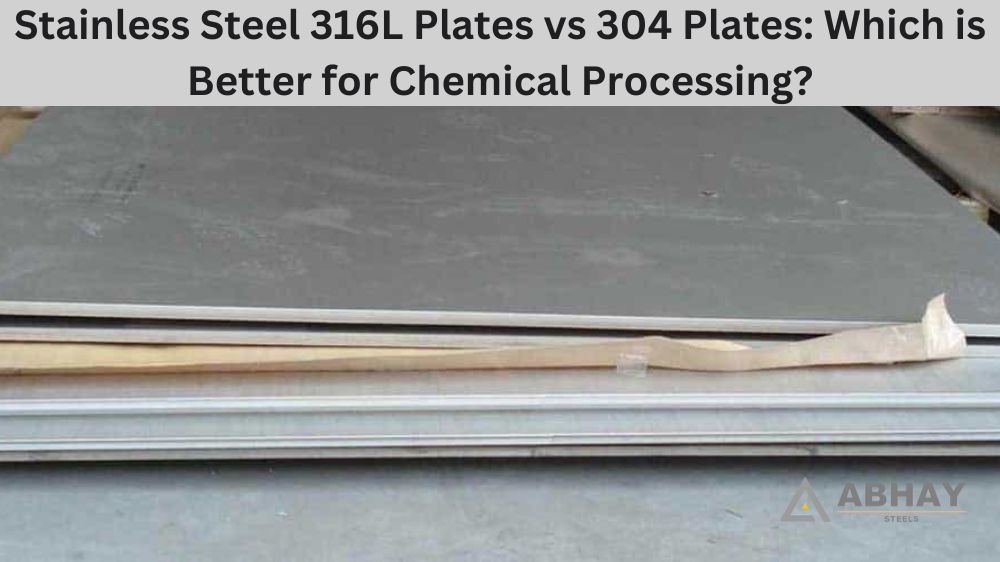
When it comes to choosing the right type of stainless steel for chemical processing applications, engineers and designers often choose to use either 316L or 304 plates. Although both materials share some similarities, they have different chemical compositions and physical properties that set them apart. In this blog post, we will discuss the differences between stainless steel 316L and 304 plates and which is better suited for chemical processing applications.
Stainless Steel 316L is superior to 304 for chemical processing due to its higher corrosion resistance, better pitting resistance, increased strength at elevated temperatures, and greater workability. 316L also has an addition of molybdenum to provide a greater level of protection against acid attacks from chlorides and other halide ions.
Chemical Composition:
Both 316L and 304 stainless steel are made of carbon, chromium, and nickel but have different percentages. 316L stainless steel contains more nickel and molybdenum, while 304 stainless steel contains more chromium and carbon. The presence of these elements determines the resistance of stainless steel to rust, corrosion, and oxidation in different environments.
Stainless steel is popular in chemical processing industries because of its excellent corrosion resistance. However, not all stainless steel is created equal. Two common types of stainless steel plates used in chemical processing are 316L and 304. While both materials contain chromium and nickel, 316L plates also contain molybdenum, enhancing their chloride corrosion resistance. This makes them ideal for use in marine environments and chemical processing industries. On the other hand, 304 plates offer good corrosion resistance but are less expensive than 316L plates. Thus, choosing between 316L and 304 plates ultimately depends on your chemical processing operation’s specific needs and budget.
Corrosion Resistance:
The key difference between 316L and 304 stainless steel plates is their corrosion resistance properties. 316L stainless steel plates have high resistance to harsh chemical and acidic environments, making them ideal for marine or offshore environments, chemical processing plants, and food processing industries. On the other hand, 304 stainless steel plates have lower resistance to acidic and aggressive chemicals, but they are well-suited for applications that don’t require high corrosion resistance. In chemical processing, corrosion resistance is of utmost importance, and that’s where the choice of metal plays a crucial role. Two popular options available in the market are Stainless Steel 316L and 304 plates. While both have impressive corrosion resistance properties, they exhibit subtle differences in composition, making one better suited for certain applications than the other. Stainless Steel 316L plates contain:
- Molybdenum.
- Enhancing their resistance to chloride-ion-induced corrosion.
- Making them a preferred option in marine environments.
On the other hand, 304 plates have higher percentages of chromium and nickel, which make them more cost-effective and easy to fabricate. Therefore, choosing the better option boils down to the specific requirements and end-use of the product.
Physical Properties:
Stainless steel 316L plates are stronger and more durable than 304 plates due to their higher percentage of nickel and molybdenum. They have a higher melting point, tensile strength, and yield strength, which makes them ideal for applications where strength and durability are essential, such as the oil and gas industry. In contrast, stainless steel 304 plates have a lower melting point, tensile strength, and yield strength, but they are more flexible and easier to form and weld.
When it comes to chemical processing, the physical properties of the materials used are crucial. Stainless steel is a popular choice due to its strength and resistance to corrosion. Two common types are 316L and 304 plates, but which is better? Well, 316L contains more molybdenum and nickel than 304, making it better suited for applications requiring high corrosion resistance and pitting resistance. However, 304 is a better option for applications that require high strength and durability. Ultimately, the choice between the two depends on the specific requirements of the chemical process.
Cost:
One of the significant differences between stainless steel 316L plates and 304 plates is their price. 316L stainless steel is more expensive than 304 stainless steel due to its higher nickel and molybdenum content. Therefore, choosing between these materials will depend on the specific application requirements, budget, and performance standards.
When it comes to chemical processing, the material used can make all the difference. Stainless steel plates are a popular choice due to their strength and resistance to corrosion. However, not all stainless steel plates are created equal. The main difference between 316L and 304 plates is their composition. 316L contains molybdenum, making it more resistant to corrosion in harsh environments. This added element also makes 316L more expensive than 304. So, which is better for chemical processing? It ultimately depends on the specific application and environment. If harsh chemicals are involved, 316L may be necessary despite the higher cost. But in certain instances, 304 may be sufficient and more cost-effective. Choosing the right stainless steel plate is crucial for maintaining safety and efficiency in chemical processing operations.
Conclusion:
In summary, there is no one-size-fits-all solution when choosing between stainless steel 316L plates and 304 plates for chemical processing applications. Both materials have pros and cons, and the choice will depend on the application’s specific requirements. If the application requires high resistance to harsh chemical environments, 316L stainless steel plates are the ideal choice. On the other hand, if the application involves less aggressive chemicals and more flexibility, 304 stainless steel plates are a good option. The cost factor is also essential, as 316L stainless steel plates are generally more expensive than 304 plates. Ultimately, consulting with industry experts or stainless steel suppliers is important to determine the best material for your specific needs.