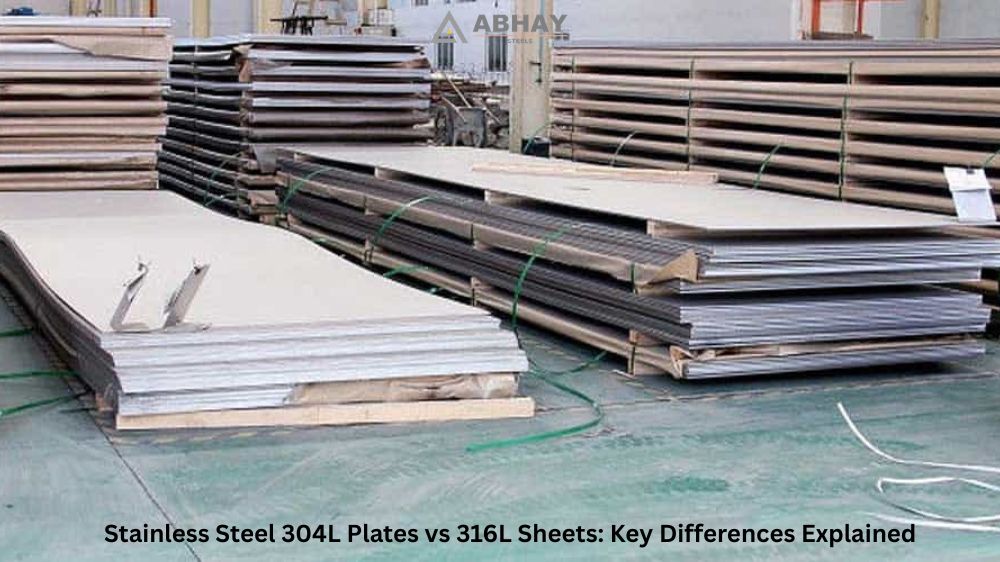
Selecting the proper metal for your project can save you considerable expense and help avoid premature material failure. In industrial manufacturing, low-carbon stainless steel grades are highly specified for their resistance to carbide precipitation during welding. You will most often find options in Stainless Steel 304L sheets and 316L plates or sheets. They may look the same on the surface, but their chemical composition gives them different properties for dealing with corrosion, heat and structural loads. Getting the right one will ensure your gear lasts without paying too much for unnecessary alloying elements.
What Are Stainless Steel 304L Sheets?
304L stainless steel sheets are an extra-low carbon version of the standard 304 alloy. This grade keeps the carbon content below 0.03% and so removes the risk of intergranular corrosion that is usually adjacent to the weld seams. It’s about 18% chromium and 8% nickel, which provides reliable strength and basic rust resistance. Fabricators like it because it cuts, bends and welds easily without the need for post-weld annealing. If you are sourcing this material, you might see it listed as 304L Stainless Steel Sheets Equivalent Grades like UNS S30403 or 1.4307. It commonly occurs in home appliances, air ducts, and structural panels. You can be assured of the exact thickness and certified mill test reports required for your production line by working with an experienced Stainless Steel 304L Sheets supplier.
Introduction to 316L Stainless Steel Sheets
The main feature that separates 316L stainless steel sheets from 304L is the addition of molybdenum, which makes up about 2% to 3% of the total composition. It also has a slightly higher nickel content for structural stability. This chemical modification greatly enhances its resistance to pitting and crevice corrosion, especially in the presence of chlorides, acids and industrial solvents. The low carbon content serves the same purpose here as it does in 304L, allowing heavy welding without ruining the metal’s corrosion resistance. It is the standard choice when standard grades fail due to chemical attack or harsh environmental exposure.
Difference Between 304L Plates and 316L Sheets
Here is a straightforward breakdown of how these two materials compare across key engineering properties.
Chemical composition
304L contains 18% chromium and 8% nickel with low carbon. 316L has a similar base but adds 2% to 3% molybdenum and increases the nickel content to around 10% to 14%.
Corrosion resistance
304L resists everyday atmospheric rust and mild acids well. 316L provides superior defense against salt, chlorine, and heavy industrial chemicals that easily pit 304L.
Strength
Both grades have very similar yield and tensile strength profiles in their annealed states. The mechanical performance is virtually identical for standard structural calculations.
Heat resistance
316L handles elevated temperatures slightly better because the molybdenum content improves creep resistance. 304L still works fine for standard thermal applications up to 800°C.
Durability
In harsh settings, 316L lasts much longer because it does not suffer from localized pitting. For dry or indoor environments, 304L delivers the same lifespan for less money.
Weldability
Both are exceptionally easy to weld due to their low carbon levels. They do not require pre-heating or post-weld heat treatment to maintain their corrosion properties.
Cost comparison
304L is more affordable because it lacks expensive alloying elements. 316L carries a price premium, often costing 30% to 40% more due to the molybdenum market value.
Corrosion Resistance Comparison
When you look at moisture and chemical exposure, 304L does a great job in fresh water and normal atmospheric conditions. But it breaks down quickly when salt is involved. 304L is very susceptible to pitting corrosion in salt water contact and the small holes that form can destroy the plate’s structural integrity. 316L performs far better in marine conditions because the molybdenum stops chloride ions from breaking down the protective oxide layer on the surface. In heavy industrial environments where sulfurous or acetic acids are present, 316L is also the safer choice to prevent equipment failure.
Applications of Stainless Steel 304L and 316L
You will find 304L used heavily in food processing machinery, milk dairies, and brewery equipment, where cleanliness is needed, but chemical exposure is low. It is also common in architectural cladding, domestic storage tanks, and general fabrication industries. 316L gets used where conditions are aggressive. This includes marine equipment, offshore oil rigs, pharmaceutical manufacturing plant lines, and chemical processing vats.
304L Stainless Steel Sheet Price Comparison
The 304L Stainless Steel Sheet Price is consistently lower than 316L. Raw material costs drive this difference, specifically the trading prices of nickel and molybdenum on the global metals market. Beyond the alloy type, the final cost depends on the thickness of the sheet or plate, the required surface finish, like 2B, No. 1, or No. 4 brushed, and current market demand. Buying standard stock sizes is always more cost-effective than requesting custom-cut dimensions.
How to Select the Right Stainless Steel Grade?
Your choice comes down to the environment your product faces and your available budget. If your project is indoors or away from the coast, 304L gives you all the protection you need without wasting money. If your equipment is exposed to chemicals, salt water or high levels of chlorine, you’ll pay more for 316L to avoid constant maintenance and early replacement costs. Consider the total cost of ownership, not just the purchase price.
Choosing a Reliable Stainless Steel 304L Sheets Supplier
You’ll want to be sure you’re getting full material traceability and official mill test certificates from your supplier. Processing options include custom shearing, precision cutting and surface finishes from trusted suppliers. They should also have established logistics to deal with domestic deliveries or international export shipping, without destroying the flat surfaces of the sheets during transport.
Conclusion
304L is the standard, cost-effective stainless steel for general fabrication, food preparation, and basic rust protection. 316L is an upgraded version meant for marine environments and heavy chemical handling, where standard metals degrade.
If you are currently planning a project and need specific pricing or material recommendations, contact Abhay Steels today. Our team can provide a detailed quote and help you choose the right sheets and plates for your technical requirements.