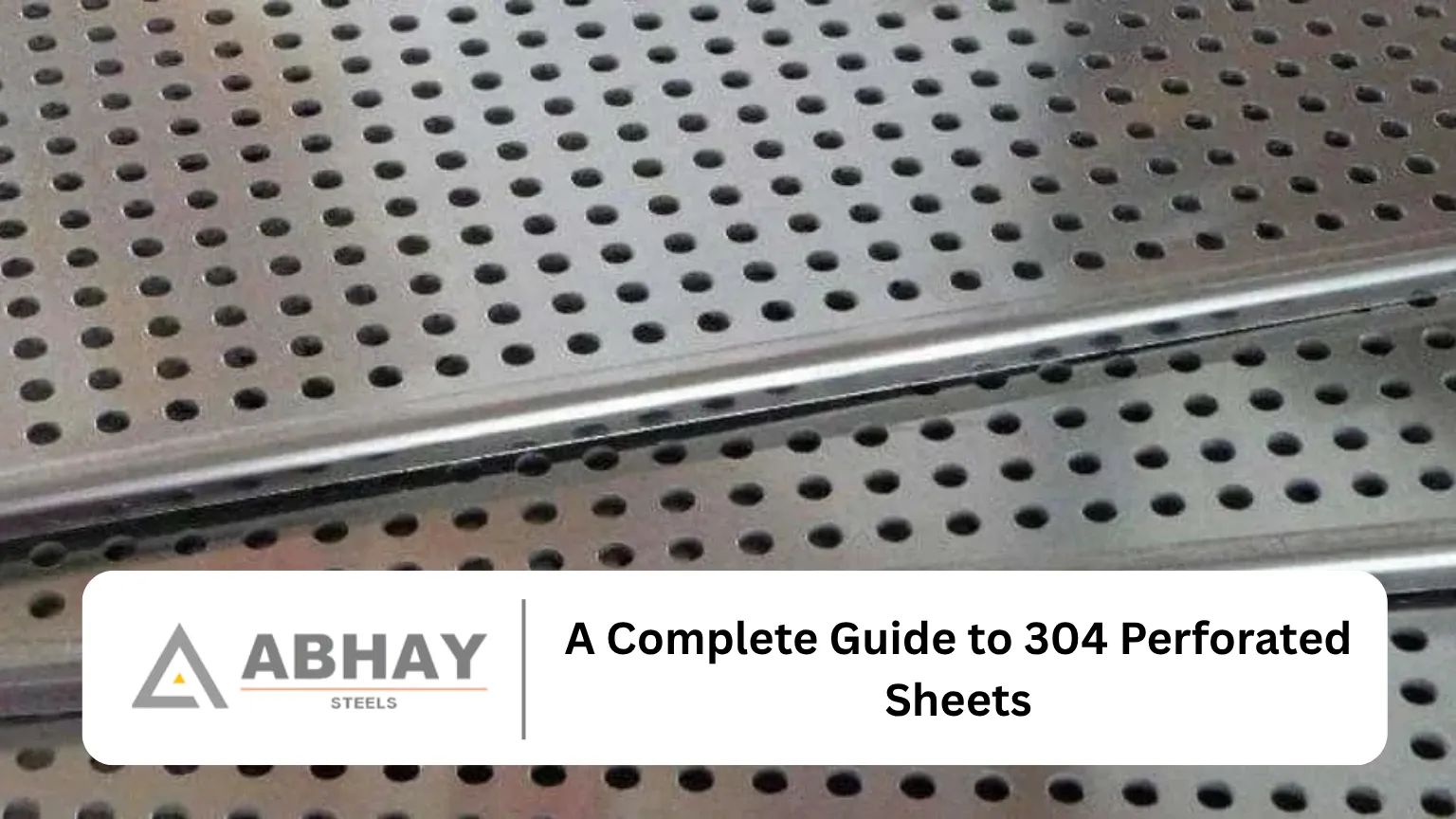
304 perforated sheets are stainless steel sheets punched with evenly distributed holes for applications that need airflow, filtration, drainage, screening, or decorative appeal. Grade 304 delivers good corrosion resistance, durability, and formability, and it is also easy for maintenance to the project. Hole pattern, sheet thickness, open area, and surface finish determine how well a perforated sheet meets its application requirements.
What Are SS 304 Perforated Sheets?
Perforated holes in a 304 stainless steel sheet, mechanically punched or perforated. The perforations provide a way for air, moisture, and light to pass through but to maintain the usefulness of the property of the metal surface. Grade 304 is a nickel-chromium alloy that is resistant to corrosion in most indoor and outdoor applications. Whatever you need, we have it in our 304 Perforated Sheets.
What Are the Main Features of 304 Perforated Sheets?
Several properties make these sheets suitable for industrial, commercial, and architectural use. To better understand what makes stainless steel 304 Perforated Sheets Unique, the key features below set the baseline for their performance and versatility.
Corrosion Resistance and Durability
Grade 304 resists moisture, oxidation and many common environmental conditions. High chloride concentrations or aggressive chemicals may call for a different grade or further evaluation, so the exposure sets the limit.
Strength and Formability
The base material gives structural support while allowing cutting, bending and forming, subject to the sheet thickness and the perforation design. A higher perforation density reduces the remaining load-bearing material and can lower panel stiffness and strength.
Easy Cleaning and Maintenance
Stainless steel surfaces clean and maintain easily where hygiene and a neat appearance matter. Suitable cleaning practice depends on the operating environment and the finish.
What Types of Hole Patterns Are Available in 304 Perforated Sheets?
Hole geometry and spacing determine airflow, filtration performance, appearance and structural strength, so the pattern is a functional choice, not just a visual one.
Round Hole Perforated Sheets
Round-hole patterns are widely used in ventilation panels, filtration screens, machine guards, and general-purpose screening applications.
Square and Slotted Hole Patterns
Square holes suit specific screening and design requirements, while slotted holes support directional flow, drainage and selected architectural applications.
Decorative and Custom Hole Patterns
Custom perforation arrangements go into facade panels, partitions, interior features and equipment covers, where the pattern meets both visual and functional needs.
How Are 304 Perforated Sheets Manufactured?
Production runs through a few defined stages from base sheet to finished panel.
Sheet Preparation and Pattern Selection
The base sheet is selected by grade, thickness, dimensions and the required perforation design before any holes are formed.
Punching and Laser Cutting
Mechanical punching produces repeated hole patterns efficiently in larger runs, while laser cutting suits intricate designs, custom layouts and precise shapes.
Deburring, Finishing, and Inspection
Finishing removes sharp edges, then checks hole dimensions, sheet flatness and the final surface. Inspection requirements follow the drawing and the application specification.
What Are the Common Applications of 304 Perforated Sheets?
The mix of open area, durability and corrosion resistance suits these sheets to several industries.
Filtration and Ventilation Systems
Perforated sheets serve filter supports, ventilation grilles, air circulation panels and equipment enclosures, with performance set by hole size, spacing and the required flow rate.
Food Processing and Industrial Equipment
Applications include equipment guards, processing baskets, screening components, and selected food-processing installations where cleanability and material compatibility are important.
Architectural and Decorative Applications
Building facades, partitions, ceiling panels, sun screens and decorative installations use them where light transmission, ventilation and visual appeal all count.
Also read: 304 Perforated Sheets Improve Filtration and Ventilation
How Do You Choose the Right 304 Perforated Sheet?
Three variables settle most selections: the hole geometry, the sheet size and the finish against the environment.
Hole Size, Pitch, and Open Area
Hole size is the diameter or dimensions of each opening; pitch is the centre-to-centre distance between holes; open area is the percentage of the surface occupied by openings. Higher open area improves airflow and drainage, while lower open area leaves more material for support and coverage.
Sheet Thickness and Overall Dimensions
Thickness drives stiffness, weight, forming and panel strength. Confirm the length, width, mounting requirements and any unperforated margins before ordering.
Surface Finish and Service Environment
Finishes such as 2B, brushed or polished influence appearance and maintenance. Match the finish and grade to the exposure conditions and the final application.
What Should You Check Before Ordering 304 Perforated Sheets?
Confirm the grade, the hole pattern and size, the open area, the sheet thickness and dimensions, the surface finish and the applicable standards before placing the order. Check the unperforated margins, the mounting details and whether the specified sheet suits any later forming or welding, since those operations can affect a perforated panel differently from a solid sheet.
Conclusion
304 perforated sheets combine corrosion resistance, durability and design flexibility for industrial, commercial and architectural applications. The correct hole pattern, open area, thickness and finish are what make a sheet suit its intended use, and getting one wrong can leave a panel that looks right but underperforms on flow, strength or appearance. Confirm the technical specifications against your operating and installation requirements before ordering.