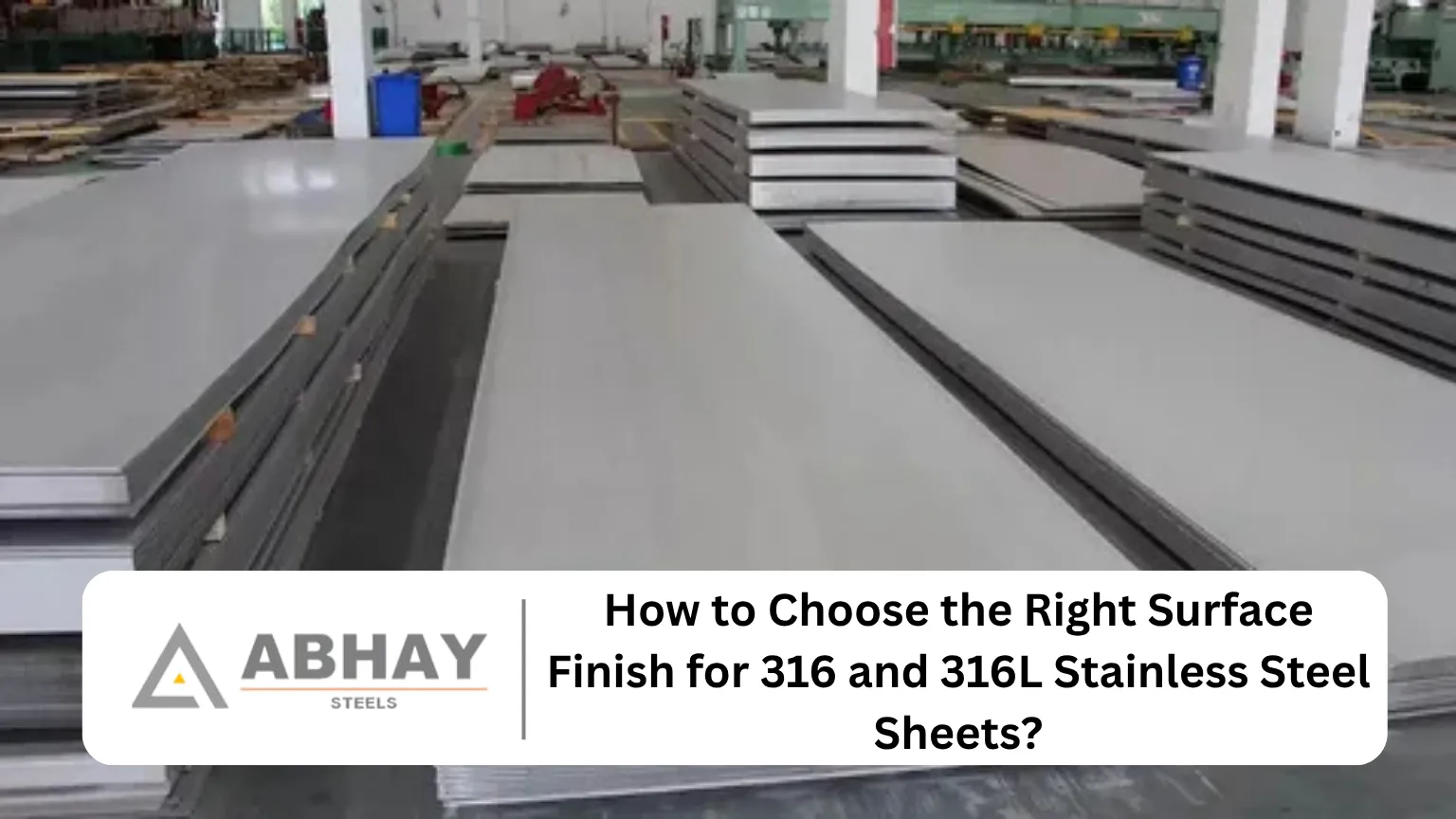
Surface finish affects the appearance, cleanability, corrosion performance, and maintenance requirements of 316 and 316L stainless steel sheets. The right finish follows the operating environment, the hygiene requirement, the fabrication process, and the intended application rather than a default choice. 316L carries a lower carbon content than 316, which makes it particularly suitable for many welded applications. Matching finish to duty is what keeps a sheet performing across its service life.
What are Stainless Steel 316/316L Sheets?
316 and 316L are molybdenum-bearing austenitic grades with improved resistance to chloride-induced pitting compared with 304 grades. The two share almost the same chemistry, differing mainly in carbon, and both come in the full range of surface finishes.
Stainless Steel 316L Sheets:
316L is the low-carbon version, with carbon held to 0.03% maximum to protect welded joints from sensitisation. That makes Stainless Steel 316L Sheets the common choice for welded fabrication exposed to corrosive media, where the weld zone has to resist intergranular attack.
Stainless Steel 316 Sheet:
316 suits applications where welding is limited and its specified properties meet service requirements. Stainless Steel 316 Sheets deliver the same molybdenum-based corrosion resistance, with the grade chosen by the fabrication plan.
What Are the Common Surface Finishes for 316 and 316L Stainless Steel Sheets?
Several stainless steel sheet finishes are available, and their texture and appearance steer material selection as much as the grade does.
No. 1 Finish for Industrial Applications
No. 1 finish is a rough, dull surface produced through hot rolling, annealing and descaling. It suits tanks and heavy industrial equipment where surface appearance is secondary to functionality.
2B Finish for General-Purpose Applications
2B finish is a smooth, moderately reflective surface produced through cold rolling, annealing and a light final pass. It serves chemical processing equipment, storage tanks and general fabrication, making it the common default for most industrial sheet work.
No. 4 Finish for Decorative and Commercial Applications
No. 4 finish carries a brushed appearance with a directional grain from abrasive polishing.
BA and Mirror Finishes for Reflective Surfaces
BA and mirror finishes both deliver reflective surfaces by different routes. A bright-annealed (BA) finish gives a bright, reflective face from annealing in a controlled atmosphere; a mirror finish is polished to a high, glass-like reflection. Both go into decorative panels, display equipment and premium interior installations.
Which Factors Should You Consider When Selecting a Surface Finish?
Application requirements should guide the finish, weighing exposure, hygiene and appearance together.
Corrosion Exposure and Operating Conditions
Moisture, chlorides, cleaning agents, and industrial chemicals influence finish selection. Smoother surfaces generally reduce contaminant accumulation, but corrosion resistance also depends on the grade and service environment.
Cleanability and Hygiene Requirements
Smooth, cleanable surfaces are important in food processing, pharmaceutical, and sanitary applications where residues must be removed effectively. The required surface roughness should follow the relevant process specification and hygiene standard rather than a general preference, since regulated processes set measurable limits.
Appearance, Fabrication, and Maintenance
Reflectivity, scratches, fingerprints, fabrication requirements, and cleaning frequency influence finish selection. Highly polished surfaces may require more frequent cleaning to maintain their appearance.
How Do Surface Finish Requirements Differ Between 316 and 316L Stainless Steel Sheets?
316 and 316L can be supplied in the same surface finishes, so the correct finish depends on the intended application rather than the grade alone. The main difference concerns fabrication. 316L’s lower carbon content reduces sensitisation risk during welding and helps preserve weld-zone corrosion resistance. The finish is chosen for the surface duty; the grade is chosen for the welding and corrosion duty. For the grade decision, see 316 vs 316L Stainless Steel.
How to Match the Right Finish to Your Application
The table below gives a starting point for matching finish to duty.
| Application | Suggested Finish | Key Consideration |
| Chemical processing equipment | 2B | Smooth surface resists residue and cleans readily |
| Food processing equipment | No. 4 or 2B | Cleanability and hygiene-standard roughness |
| Architectural panels | No. 4 or BA | Consistent appearance and weather exposure |
| Heavy industrial equipment | No. 1 | Function over appearance |
| Decorative equipment | BA or mirror | High reflectivity and visual finish |
These are general recommendations; the actual requirement depends on the operating conditions, the design specification and the applicable standards.
What Should You Check Before Ordering Stainless Steel Sheets?
Confirm the stainless grade, the surface finish designation, the thickness, the dimensions and the applicable material standards before placing an order. Check that the specified finish suits any subsequent welding, polishing or forming, since some operations alter or damage a finish. Protect the selected finish during fabrication. The processing sequence matters as much as the specified finish.
Conclusion
Selecting the right surface finish for 316 and 316L stainless steel sheets requires balancing corrosion exposure, hygiene requirements, appearance, fabrication methods, and maintenance needs. Select the finish for the surface duty and the grade for the welding and corrosion duty, then specify both before ordering. At Abhay Steels, we help buyers identify suitable 316 and 316L stainless steel sheets based on their required grades, surface finishes, and application specifications. Contact us to discuss your material requirements and request a quotation.