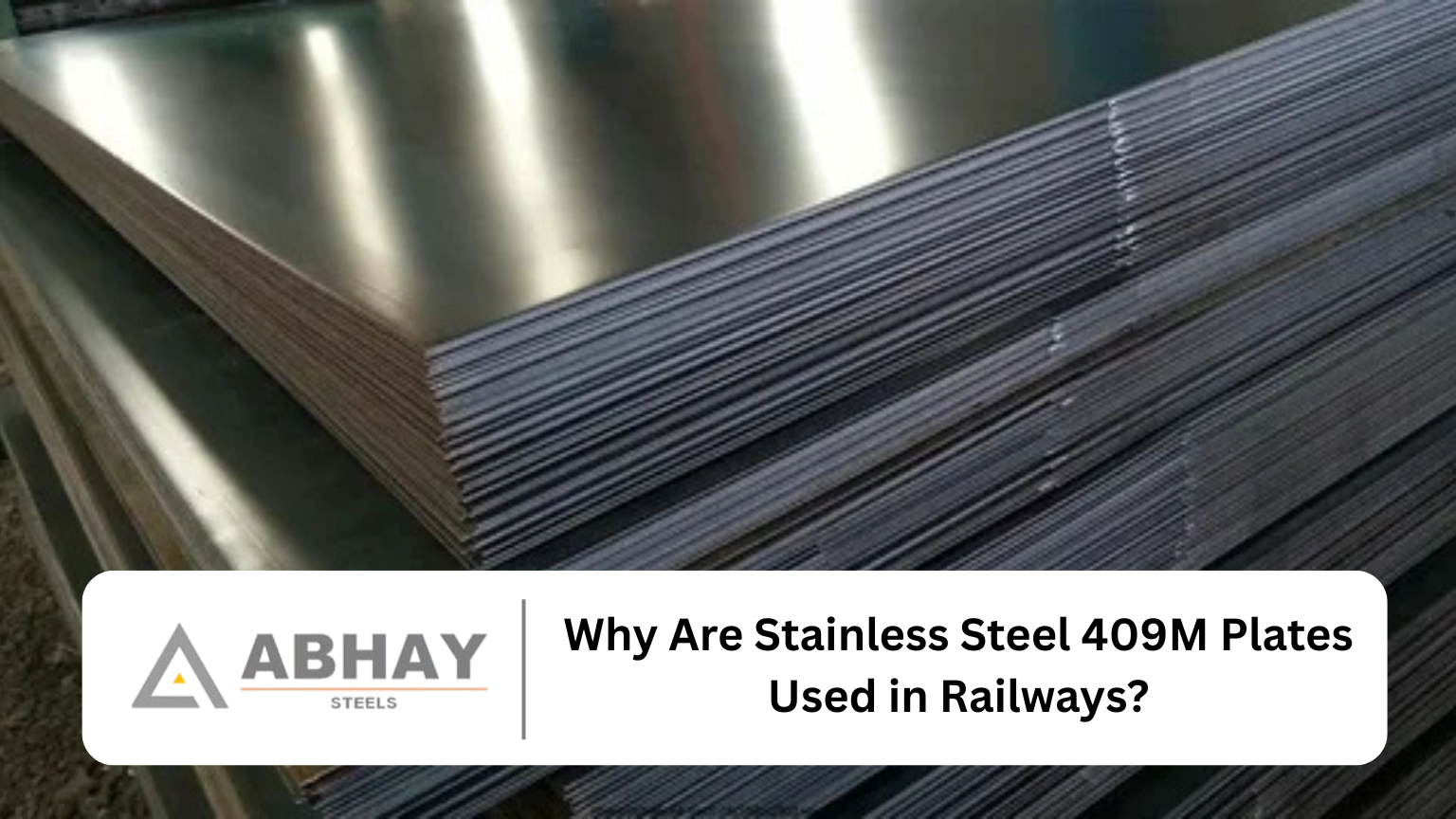
Railway coaches travel hundreds of kilometres each day under heavy mechanical load, through rain, humidity, and industrial pollution. The metal used in their construction needs to handle all of that without buckling or corroding within a few years of service. That is why Indian railway manufacturers turned to stainless steel 409M plates as the standard structural material decades ago. Stronger than basic ferritic grades and far more affordable than austenitic options like 304 or 316, these plates now form the backbone of modern coach construction across the country.
What Is Stainless Steel 409M?
SS 409M plates are placed within the ferritic family of stainless steel but carry a modified composition that pushes performance well beyond standard 409. The base remains chromium and iron, typically with 10.5 to 11.75% chromium, but the addition of controlled carbon, manganese, and molybdenum tightens the grain structure and raises the tensile strength to around 450 MPa minimum. That improvement over plain 409 makes the material far more suited to structural applications where load-bearing consistency matters.
SS 409m plates also carry a lower carbon ceiling than regular 409, which directly improves weldability and reduces the risk of sensitisation at weld zones. Manufacturers across India specify this grade precisely for those metallurgical advantages.
Why Railways Choose SS 409M Plates?
High Strength and Structural Stability
A single railway coach weighs between 40 and 65 tonnes fully loaded. The structural panels and frames supporting that weight need material that does not yield under repeated dynamic stress cycles. SS 409M delivers a yield strength of 205 MPa minimum, which meets the Indian Railways specification IRS M-44 for coach body construction. Frames, underframes, and cross-members built from this grade maintain dimensional stability over years of in-service loading.
Excellent Corrosion Resistance
Coaches run through coastal humidity, monsoon rain, and tunnel condensation without a break. The 10.5 to 11.75% chromium content in 409M forms a passive oxide layer that actively resists moisture-driven rust. Unlike carbon steel, which requires frequent repainting to prevent surface corrosion, 409M panels hold up without coatings in most operating environments. That cuts the maintenance cycle from roughly every 2 to 3 years on painted carbon steel to 8 to 10 years on exposed 409M.
Good Weldability and Fabrication Properties
Coach body manufacturing involves hundreds of weld joints per unit. The reduced carbon content in 409M keeps heat-affected zone embrittlement to a minimum, which means fabricators do not need post-weld annealing in most cases. That speeds up production significantly. Laser cutting, press braking, and roll forming all work cleanly on this grade, making it practical for the high-volume output that railway manufacturers require.
Cost-Effective Alternative to Higher Alloy Grades
Switching to austenitic grades like 304 would add roughly 30 to 40% to material costs per coach without delivering proportional structural benefit for this application. SS 409M carries enough chromium for the corrosion resistance that railway environments demand, without the nickel content that drives up the price of austenitic grades. Over a production run of 200 coaches, that difference compounds into crore-level savings at the fleet level.
Long Service Life
Indian Railways targets a service life of 30 years per coach. Carbon steel coaches rarely reach that without significant structural repairs. Coaches built with 409M panels consistently achieve 25 to 30 years of service with standard preventive maintenance. Fewer replacements per decade translate directly into lower lifecycle costs and reduced downtime for the operator.
Common Uses of SS 409M Plates in Railways
SS 409M plates appear throughout coach and wagon construction in the following roles:
- Coach body side panels and roof sheets that form the outer shell of passenger coaches
- Underframe members and cross-bearers that carry floor loads and running gear weight
- Wagon bodies and end walls in freight applications where impact resistance matters
- Structural pillars and door frames within coach interiors
- Footboard assemblies and step brackets exposed to ground-level moisture
- Partition walls and luggage rack supports inside coaches
- Buffer attachment plates and mounting structures at coach ends
How Is SS 409M Different from Regular SS 409?
Both grades share the same ferritic base but 409M adjusts three important parameters to make it more applicable for structural use. First, carbon content is lowered to a maximum of 0.030% in 409M compared to 0.08% in standard 409, which improves weld zone brittleness. Second, manganese rises to around 1.0% to boost tensile strength. Third, the tighter compositional controls in 409M allow it to meet IRS M-44 without additional treatment steps that plain 409 would require.
Standard 409 handles exhaust system applications well because those components do not carry structural loads. The moment an application involves welded joints under sustained mechanical stress, as with railway coaches, 409M becomes the correct choice. The differences are not cosmetic. They reflect a deliberate metallurgical shift toward structural performance.
To understand the full compositional and mechanical comparison between the two grades, read the detailed breakdown here.
Conclusion
409M stainless steel earns its position in railway construction through a combination of structural strength, corrosion resistance, weldability, and cost efficiency that no comparable grade matches at the same price point. Coaches built on this material hold up through 30-year service cycles with far fewer structural interventions than carbon steel alternatives. For Indian railway manufacturers and wagon builders, the grade has moved from preference to standard.
Abhay Steels supplies 409M Stainless Steel plates and sheets sourced from Jindal, India’s largest domestic steel producer, with Mill Test Certificates available for every order. Visit Abhay Steels to check stock, request specifications, or place an inquiry today.